
Production of eight infrastructure sectors rose at a three-month high of 7.4 per cent in December 2022 against 4.1 per cent in the same month of previous year on a better show by coal, fertiliser, steel, and electricity segments, according to the official data released on Tuesday. Crude oil output, however, contracted by 1.2 per cent in December last year. The production of eight key sectors rose by 5.7 per cent in November 2022.

The new IIP series based on the new base year, is expected to lead to better capturing of ground data

Keeping pace with the rapidly changing income and consumption pattern, the government will soon come out with a new Index of Industrial Production (IIP) and develop indices for measuring growth of SSI sector and calculating consumer prices in urban areas.

Chief economist at State Bank of India has revised downward the full-year growth forecast to a low 6.8 per cent from 7.5 per cent earlier for FY2023, citing "the way below GDP numbers for the first quarter". The National Statistical Office on Wednesday released the Q1 growth numbers which showed a consensus growth of 13.5 per cent, pulled down by the poor show of the manufacturing sector, which reported a paltry 4.8 per cent expansion in the first three months of FY23, negating the robust show by the services sector. Consensus forecast was 15-16.7 per cent of which the RBI made the highest forecast of 16.7 per cent.

The overall market breadth was positive as 1,599 stocks advanced against 1,246 declining ones, on the BSE.

The factory output, as measured by the Index of Industrial Production, soared to 16-month high of 8.2 per cent in October on good performance of the manufacturing, power sector and higher output of capital as well as consumer goods, indicating sudden recovery in the economy.

As per the official data, industrial output in the April-June quarter too contracted by 0.1 per cent this fiscal, against a growth of 6.9 per cent in the corresponding period a year ago.

Inflation is expected to be higher in December than 7.48 per cent in November, since food inflation has surged up to 18.32 per cent during the week ended December 25.

Encouraged by the industrial production growth rate of 10.8 per cent in October, Finance Minister Pranab Mukherjee on Friday sounded confident that the trend would continue and the fiscal would end with double-digit growth rate.

The industrial output for the third month in a row remained in the negative territory, contracting 1.5% in January

India's industrial production rose to 5.2 per cent in May from 4.5 per cent in April 2023, mainly due to good performance by the manufacturing and mining sectors, according to the official data released on Wednesday. The factory output growth measured in terms of the Index of Industrial Production (IIP) stood at 19.7 per cent in May 2022, mainly due to a lower base effect. "The growth rates over corresponding period of previous year are to be interpreted, considering the unusual circumstances on account of COVID 19 pandemic since March 2020," an official statement explained.

The manufacturing sector, a key indicator of economic activity, grew 10.6 per cent year-on-year in October.

The change in the baseline for IIP and WPI, currently at 2004-05, is expected to bring in more accuracy in mapping the level of economic activity and calculating other numbers like national accounts.

Expressing serious concern over contraction in industrial output in November, India Inc called for immediate policy interventions, including a rate cut by RBI, to prevent job losses and boost demand.

Capital goods output rose by a robust 20 per cent in the month under review as against a contraction of 2.4 per cent earlier.

Gross collection of tax on corporate and individual earnings jumped nearly 24 per cent so far in the current fiscal year that started on April 1, the tax department said on Sunday. The gross collection of taxes on corporate earnings rose 16.74 per cent during April 1 to October 8, while personal income tax collection jumped 32.30 per cent, the tax department said in a statement. Direct tax collection came at Rs 8.98 lakh crore between April 1 to October 8, 2022, 23.8 per cent higher than the gross collection in the corresponding period a year ago.

In terms of industries, 17 out of 23 industry groups in the manufacturing sector have shown negative growth.

On a day like this, the market breadth was predictably strong. Out of 2,827 stocks traded on the BSE, there were 1,629 advancing stocks as against 1,105 declines.
If the year 2010 was the year of the hatchbacks, it appears that the year 2011 is all set to be big on sedan launches.

But it is likely that campaign spending resulted in some positive activity through this period.
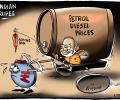
Retail inflation inches up to 3.77%; IIP growth dips to 3-month low

The fall was led by L&T, IndusInd Bank, PowerGrid, NTPC, TCS, ICICI Bank, Axis Bank, Hero MotoCorp, Bharti Airtel and SBI, declining up to 2.64 per cent.

India's industrial production growth rose marginally to 5.6 per cent in February from 5.5 per cent in January 2023, mainly due to good performance of the power, mining and manufacturing sectors, according to official data released on Wednesday. There was an improvement on an annual as well as sequential basis. The factory output growth measured in terms of the Index of Industrial Production (IIP) stood at 1.2 per cent in February 2022.

The Index of Industrial Production grew 5.6 per cent in August, compared with a revised 15.2 per cent in July.

Slowdown in industrial production notwithstanding, a marginal increase in inflation raised the clamour for another round of rate cut by the Reserve Bank on April 4 to boost economic activity.
India's industrial output contracted by 0.6 per cent in December, 2012 compared to a growth of 2.7 per cent in same month a year ago.

The IIP data showed a significant slowdown in the manufacturing sector, which grew at 4.2 per cent in July 2019 as compared to 7 per cent a year ago.

The economy, though projected to grow 9.6 per cent in the next financial year in year-on-year growth term, may grow just 1 per cent in real terms to Rs 147.17 lakh crore as against Rs 145.66 lakh crore in 2019-20, at the 2011-12 prices, according to a report by India Ratings. The size of the economy, as per the National Statistical Office's data, had stood at Rs 145.66 lakh crore in 2019-20, at the 2011-12 prices. According to the rating agency, the country's gross domestic product (GDP) is expected to contract 7.8 per cent to Rs 134.33 lakh crore in 2020-21, but may grow 9.6 per cent to Rs 147.17 lakh crore in 2021-22.
An impressive performance by the manufacturing sector catapulted industrial growth to 7.8 per cent during the first four months of the current financial year.

Petitioning the RBI to slash key interest rates, India Inc on Thursday said the recovery in industrial production in November must be seen with "caution" as the performance of critical sectors like capital goods remains poor.

Production of eight infrastructure sectors increased by 5.4 per cent in November against a 3.2 per cent growth in the same month last year on a better show by coal, fertiliser, steel, cement and electricity segments, according to the official data released on Friday. Crude oil, natural gas and refinery products, however, recorded negative growth in November this year. The production growth of eight key sectors slowed down to 0.9 per cent in October.

The internals of the food inflation are worrying, given a broad-based uptick across categories that tend to be sticky, such as proteins, and a narrower-than-expected reduction in inflation for vegetables.

The growth rate in the production of eight key sectors slowed down to a 20-month low of 0.1 per cent in October on account of contraction in the output of crude oil, natural gas, refinery products, and cement, according to the official data released on Wednesday. In October last year, these sectors expanded by 8.7 per cent. In September this year, the core sectors' output growth stood at 7.8 per cent.

As the results season kicks in, the quarterly earnings numbers of several blue-chip firms -- such as Infosys and Reliance Industries -- along with global trends and trading activity of foreign investors, will determine equity market movement in the holiday-shortened week ahead, according to analysts. The domestic WPI inflation data for June -- scheduled to be announced on Monday -- will also influence trading sentiments, traders said. Markets will remain closed on Wednesday for Muharram.

Industrial production (IIP) grew to a three-year high of 6.4 per cent in August, up from 4.1 per cent in July.

India's industrial production rose by 7.1 per cent in November 2022 after contracting in October, according to official data released on Thursday. The Index of Industrial Production (IIP) grew by 1 per cent in November 2021.
The print media industry is on a roll, if Index of Industrial Production (IIP) data is to be believed without a pinch of salt.

Industrial production in November was expected to grow 1.0 per cent from a year earlier, after shrinking 1.8 per cent in October, according to the median consensus of 20 economists.

India's industrial production grew by 1 per cent in December, official data showed on Friday. According to the Index of Industrial Production (IIP) data, the manufacturing sector output grew by 1.6 per cent in December 2020.

Macroeconomic data announcements, global factors and trading activity of foreign investors would be the key triggers for the domestic stock markets this week, analysts said. Last week, the benchmark indices joined the broader market's party despite a host of negative global cues. In the broader market, the BSE midcap and smallcap gauges hit their all-time highs on Friday.
